
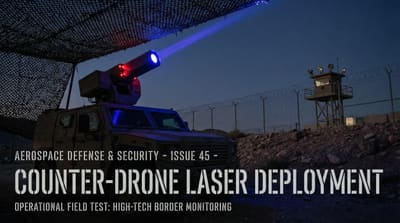
In an unprecedented move that sent shockwaves through the aviation and drone industries, the Federal Aviation Administration abruptly grounded all flights at El Paso International Airport early Wednesday morning, issuing a 10-day airspace closure before reversing the decision just seven hours later. The incident has exposed critical coordination failures between the FAA and the Department of Defense over counter-drone technology deployment — and it carries enormous implications for the future of UAS operations in national airspace.
Key Facts at a Glance
- FAA issued NOTAM closing 10-nautical-mile radius around El Paso International Airport
- Closure took effect 11:30 PM Tuesday; lifted by 7:00 AM Wednesday
- Originally planned for 10 days (through February 20)
- Cause: Pentagon's uncoordinated deployment of high-energy counter-drone laser at Fort Bliss
- CBP was physically operating the laser technology, loaned by DoD
- At least 14 commercial flights canceled; ~40 departures were scheduled Wednesday
- 3.5 million passengers used the airport in 2025
- Trump administration claimed a "cartel drone incursion" prompted the closure
What Actually Happened
The sequence of events reads like a case study in interagency dysfunction. According to multiple sources briefed on the matter, the Pentagon had been developing and testing a high-energy laser system designed to counter hostile drones. While the system had previously been tested in remote areas, the Department of Defense sought to deploy it near Fort Bliss — which sits directly adjacent to El Paso International Airport and its civilian airspace.
The FAA and Pentagon had a meeting scheduled for February 20 to review potential safety impacts and coordinate mitigation measures. But the Defense Department moved to deploy the system early, without completing that coordination. When the FAA learned of the premature deployment, it took the most dramatic action available: shutting down the airspace entirely.
"Through my conversations with federal and local officials, it has become abundantly clear the FAA was tracking the DoD's counter-drone tests for multiple days, and the FAA responded — in error — with the disproportionate response of abruptly closing our airspace for 10 days." — Rep. Gabe Vasquez, D-New Mexico
The situation became more convoluted when Trump administration officials offered a different explanation. Transportation Secretary Sean Duffy stated that the FAA and Department of War (as the administration has rebranded the Pentagon) "acted swiftly to address a cartel drone incursion." Multiple lawmakers with access to classified briefings disputed this account.
The Counter-Drone Laser System
CNN reported that the technology in question is a high-energy, directed-energy weapon designed to neutralize drone threats. In a revealing detail, sources confirmed that Customs and Border Protection — not the military — was physically operating the laser when it was used this week to shoot down four mylar balloons near El Paso.
Defense Secretary Pete Hegseth had signed off on loaning the technology to CBP in recent weeks, with Defense Department personnel present during operations. This cross-agency technology transfer raises its own questions about oversight and authorization protocols for counter-UAS systems. For a deeper look at the operational risks this creates for the drone industry, see our analysis of what commercial operators must learn from the El Paso crisis.
The NOTAM issued by the FAA included a stark warning to pilots: "The United States government may use deadly force against the airborne aircraft, if it is determined that the aircraft poses an imminent security threat." This language — typically reserved for restricted military airspace or national security events — underscores how seriously the FAA viewed the risk.
The Fallout
El Paso Mayor Renard Johnson called the closure "a major and unnecessary disruption," comparing it to airspace actions not seen since 9/11. No advance notice was provided to the city, airport operations, or local elected officials.
"I want to emphasize that this was an FAA decision, but what I can say is that nothing happening on Fort Bliss would have impacted the El Paso airport or its operations." — Rep. Veronica Escobar, D-El Paso
The incident triggered bipartisan criticism. Representatives Rick Larsen and André Carson — ranking members of the House Transportation Committee and Aviation Subcommittee — called the situation "unacceptable" and pushed for improved interagency coordination. Airlines including Southwest, Delta, American, United, and Frontier all scrambled to issue travel waivers and rebook affected passengers.
What This Means for the Drone Industry
1. Counter-UAS Technology is Outpacing Regulation
The El Paso incident is a stark demonstration that counter-drone technology deployment has moved faster than the regulatory frameworks designed to govern it. Directed-energy weapons capable of disabling aircraft are being loaned across agencies and deployed near civilian airports without completed safety reviews. For the drone industry, this creates an unpredictable operating environment — particularly for operators flying near military installations or border areas.
2. FAA-DoD Coordination Gap is a Systemic Risk
The fact that two federal agencies couldn't coordinate on a technology deployment near one of the nation's busiest border airports — and that a scheduled meeting was bypassed — reveals a structural coordination gap. This same gap affects commercial drone operators who must navigate overlapping FAA airspace rules, DoD restricted areas, and now counter-UAS systems that may not be publicly disclosed.
3. BVLOS Operations Face New Uncertainty
Operators pursuing Beyond Visual Line of Sight (BVLOS) waivers — especially in border regions or near military installations — should take note. Our professional consulting team can help assess risk exposure in these complex environments. The presence of undisclosed counter-drone systems could pose risks to commercial UAS flights. The industry needs clarity on where these systems are deployed and what deconfliction protocols exist for legitimate drone operations.
4. The "Cartel Drone" Narrative Matters
The administration's framing of this event as a response to cartel drone activity — disputed by lawmakers with access to classified briefings — has implications for future policy. If border drone threats become a justification for expanded counter-UAS authority, it could reshape airspace access for commercial operators along the entire southern border.
5. Part 107 Operators Need Situational Awareness
If a high-energy laser system can be deployed near a civilian airport without completing interagency coordination, the implications for small UAS operators are significant. Operators should monitor NOTAMs more closely than ever, particularly in areas near military installations, and consider whether their operations fall within potential counter-UAS engagement zones. The FAA's increasingly aggressive stance on violations—outlined in our coverage of the 2026 enforcement crackdown—makes compliance more critical than ever.
Looking Ahead
The El Paso incident will likely accelerate several legislative and regulatory efforts already in motion, including the Pentagon-FAA joint anti-drone laser tests now underway at White Sands:
Congressional oversight hearings are all but certain. Both parties expressed concern about the lack of coordination and communication, creating unusual bipartisan momentum for reform.
Counter-UAS deployment protocols will face scrutiny. The current framework — where military technology can be loaned to law enforcement agencies and operated near civilian airspace — clearly needs guardrails. This coordination challenge contrasts sharply with Europe's comprehensive drone security plan for major events.
NOTAM and pilot alert systems may be revised to provide better real-time information about counter-drone operations that could affect civilian flights, including small UAS.
The FAA Reauthorization discussion , already ongoing, now has a dramatic case study in the need for updated counter-drone authority frameworks that balance security needs with airspace access.
For drone professionals, the message is clear: the counter-UAS landscape is evolving rapidly, and staying informed isn't optional — it's operational necessity. The El Paso shutdown may have lasted only seven hours, but its implications for how we share the national airspace will be felt for years.
FAA Counter-UAS Airspace Fort Bliss El Paso Directed Energy BVLOS Part 107 DoD CBP Drone Regulations
Sources
CNBC — FAA abruptly halted El Paso flights over Defense Department's plans for anti-drone technology CNN — Surprise US military plans to use counter-drone laser triggered El Paso airspace closure El Paso Matters — FAA lifts unprecedented El Paso airspace restrictions after seven hours The New York Times — Officials Claim Drone Incursion Led to Shutdown of El Paso Airport Associated Press — El Paso airspace: Dispute over lasers and cartel drones led to closure
📺 Watch the Video Briefing
Get expert video analysis on this topic and more on the UAVHQ YouTube channel.
🚁 Stay Ahead of the Drone Industry
Expert analysis on FAA regulations, commercial operations, and emerging technology — delivered to your inbox.
Subscribe
Consulting Intake Paused
UAVHQ is not currently accepting new consulting clients. Existing commitments remain supported; select time-sensitive safety or regulatory inquiries may be reviewed as availability allows.
Sponsored by
Your Brand Here
Reach drone professionals, commercial operators, and aviation decision-makers.
📺 Watch the Video Briefing
Get expert video analysis on this topic and more on the UAVHQ YouTube channel.
🚁 Stay Ahead of the Drone Industry
Expert analysis on FAA regulations, commercial operations, and emerging technology — delivered to your inbox.
Subscribe
Sponsored by
Your Brand Here
Reach drone professionals, commercial operators, and aviation decision-makers.
UAVHQ
Drone industry intelligence and professional UAV consulting from Wesley Alexander — Senior Test Pilot with 25+ years of aviation leadership.
Explore
Connect
© 2026 UAVHQ. All rights reserved. · Privacy Policy